
The US Trade Representative's office removed a social media post featuring a map of India that showed the entire region of Jammu and Kashmir, including Pakistan-occupied Kashmir, as well as the Aksai Chin region as part of Indian territory.

China has established a new county in Xinjiang province near Pakistan-occupied Kashmir (PoK) and the Afghanistan border, a move seen as strengthening security along the Wakhan Corridor and addressing concerns about Uyghur separatist militants.

Phunchuk Stobdan's forte was candour and strong views on India's defence. Naturally, India's adversaries were in awe of him, fearing his views and unyielding stand on boundary issues, remembers Tarun Vijay.
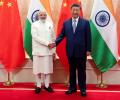
'China's basic purpose of taking the Shaksgam Valley was access to the Indian Ocean.'

Today's situation in the Shaksgam Valley is the consequence of what happened in Gilgit in 1947. But is India ready to militarily get back its territories? asks Claude Arpi.
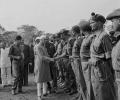
The well-fought defensive battles in Aksai Chin and eastern Arunachal, in remote and forbidding locations such as Galwan, Rezang La, Gurung Hill and Walong, effectively halted Chinese advances not once but twice during the campaign. These engagements, fought with grit and without adequate support, were not immediately known to the world in 1962, points out Dr Kumar.

'Critics say the political leadership abandoned the army chief or did not back him. I disagree. 'Military leaders are trained to take decisions when given a free hand.' 'This was a clear go-ahead from the prime minister to the army chief.'

The Bharatiya Janata Party on Tuesday said it held a formal meeting with a Chinese delegation openly, given the "improved" relations between New Delhi and Beijing, unlike the Congress which, it alleged, "secretly" signed a memorandum of understanding with the neighbouring country's ruling party.

China is set to build a rail link connecting Xinjiang province with Tibet, part of which will run near the Line of Actual Control (LAC) with India.

The fierce battles of Galwan, Rezang La, Gurung Hill, and Walong taught the PLA a hard lesson: Fighting the Indian Army would never be easy or inexpensive.
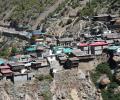
On August 5, 1953, Jawaharlal Nehru sent a strange note to the foreign secretary. It is worth mentioning because it was symptomatic of the lack of knowledge about Western Tibet in India and in South Block in particular, notes Claude Arpi.
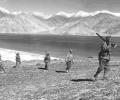
As India and China continue to face off across the Himalayas six decades later, the echoes of that earlier conflict remain unmistakable. The core of China's sensitivity lies not in maps or mountain passes, but in its perception of sovereignty over Tibet, points out Dr Kumar.

The Galwan clashes indicate to the limitations in relations if they do not address border stability, points out Srikanth Kondapalli.
The Galwan clashes indicate to the limitations in relations if they do not address border stability, points out Srikanth Kondapalli.

The map displayed by PDP during a power point presentation yesterday showed Aksai Chin and Karakoram region painted in red and part of China and Pakistan-occupied Kashmir (PoK) in green.
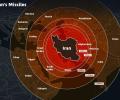
The Israel Defence Forces (IDF) on Saturday issued a new graphic showing Kashmir as Indian territory, rectifying their previous mistake.

Satellite images dated August 17, 2021, have revealed upgraded infrastructure near the Depsang plains along with the Western sector of the LAC between India and China.
The Chinese action followed 'India's recent, illegal construction of defence facilities across the border into Chinese territory in the Galwan Valley region', a write-up in the state-run Global Times tabloid said, quoting unnamed military sources.
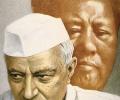
'Delhi was not concerned.' 'It would continue sleeping for several more years, with the result that Indian territory is still occupied by China today,' says Claude Arpi.

'The whole of Ladakh knows that China has usurped our land'
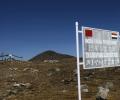
China on Wednesday defended its move to release a new 'standard map' for 2023 showing Arunachal Pradesh and Aksai Chin as part of its territory, saying that it is a 'routine practice' in accordance with its law and urged India to 'stay objective and calm' and refrain from 'over-interpreting' the issue.

Joshi's reaction came after Gandhi termed as "very serious" the issue of China releasing a "standard map" that laid claim over Arunachal Pradesh and Aksai Chin, and claimed the neighbouring country has already taken India's land in Ladakh and Prime Minister Narendra Modi should speak on the issue.

'With continued focus on votes, upcoming by-polls and purchasing politicians, the political hierarchy has little time for national defence.' 'They would do well to heed a veteran scholar, who says, "There will be war with China in the next few years. The next full scale war will have the involvement of Pakistan and terror elements, insurgents and intelligence assets operating inside India",' warns Lieutenant General Prakash Katoch (retd).

India on Tuesday lodged a strong protest with China over its so called 'standard map' laying claim over Arunachal Pradesh and the Aksai Chin, and asserted that such steps only complicate the resolution of the boundary question.

'China will do everything to hamper our ability to be a competitor.' 'China wants every country in the region to be subservient and we are the biggest stumbling block.'

A controversy has erupted over the alleged misrepresentation of the India map on the posters displayed by the Congress to commemorate the centenary of 1924 Congress session in Karnataka's Belagavi, with the Bharatiya Janata Party dubbing it as 'vote bank' politics by the national party.
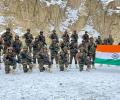
'China doesn't want to settle the boundary dispute because that gives them a reason to pick a fight with India.'

The Chinese inference is that if the Chinese visa is embossed on an Indian passport, held by Indian citizens from Arunachal Pradesh, it may be tantamount to recognising Indian sovereignty over Arunachal Pradesh, states Rup Narayan Das.

'The Chinese are retaining geostrategic pressure on India by keeping troops there and building infrastructure continually.'

China has chosen to keep New Delhi guessing, while retaining for itself the option of constantly changing facts on the ground and shifting the LAC westwards -- the strategy called 'salami slicing', notes Ajai Shukla.
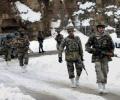
'The Indian Army's surveillance had noticed the Chinese movements.' 'There was no intelligence failure.'

India should have learnt lessons from the 1962 war but no headway was made in the development of border infrastructure till 2014, he claimed, adding that the Modi government increased the budget for the same from Rs 3,500 crore to Rs 14,500 crore.

'We have to be prepared on the borders to withstand Chinese expansionist designs.'

'It is flabbergasting to think that this heavenly region has, for decades, been coveted by India's aggressive neighbours,' says Claude Arpi after a recent visit to Ladakh. 'Wanting to use the newly created infrastructure to defend the borders after the clash of 2020 with China and the resulting standoffs, the home ministry is keen to boost border tourism to show that these areas are controlled by India.'

When China protested strongly over the August decision on J&K -- not once but twice -- we ignored it. And to compound matters, we simply turned our back and walked over to the 'Quad' alliance with the US, upgrading it to ministerial level, and thereafter began following the American footfalls on Taiwan and COVID-19 to taunt and humiliate Beijing, observes Ambassador M K Bhadrakumar.

'We are not going to be threatened by China neither are we going to threaten China.'
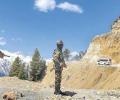
One hopes the new Lok Sabha will mark a break from a dismal tradition -- lack of interest in defence and security policies, argues Colonel Anil A Athale.
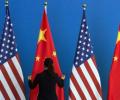
Throughout its standoff with India along the Line of Actual Control (LAC), Chinese officials sought to downplay the severity of the crisis, emphasising Beijing's intent to preserve border stability and prevent the standoff from harming other areas of its bilateral relationship with India, the Pentagon said in a report on Tuesday.

A Kashmiri leader has revealed that China is in occupation of parts of Kashmir, Gilgit-Baltistan and Aksai Chin, despite not being a party to any of these land ownership disputes

'Unless India ups the ante, Beijing will continue to believe its transgressions are cost free and will feel encouraged to do more of the same.'
 © 2026 Rediff.com - Advertise with us - Disclaimer - Privacy Policy - Sitemap - Feedback - About us - Terms of use - Grievances